
Anchored in Grace: Unpacking Paul's Blueprint for a Transformed Life in Titus
Jan 24, 2026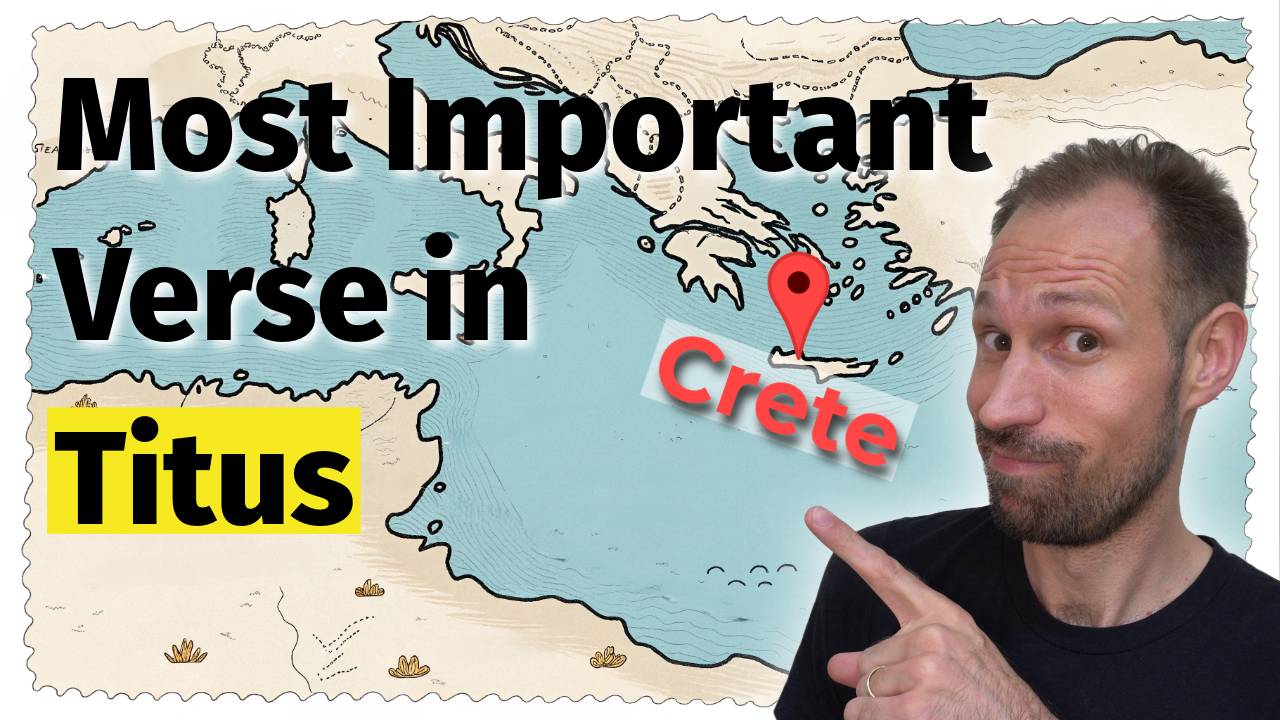
The Book of Titus is far more than a simple set of marching orders for a young pastor; it is a foundational blueprint for how the Gospel transforms a corrupt society and an individual heart. Paul left Titus on the island of Crete, a place so notorious for treachery and immorality that the ancient world had a saying for liar: Cretizo ("You are a Cretan"). Titus was charged with putting this chaotic situation "into order" (Titus 1:5) by appointing elders and combating rampant issues like immorality and Jewish false teaching (Titus 1:10-16). This daunting task is what gives the letter its urgency and its powerful theological core.
The Theological Anchor
The entire message, and arguably the anchor of the whole letter, is captured in Titus 2:14: "Jesus Christ gave Himself for us to redeem us from all lawlessness and to purify for Himself a people for His own possession, a people who are zealous for good works."
This verse highlights the two central actions of the Gospel: redemption (saving us from lawlessness) and purification (training us for good works).
In this video, we unpack how Paul structured his letter with this anchor in mind, showing that sound doctrine isn't just something to be believed, but something that must result in a radically different life.
🎥 Watch the video on The Central Message of Titus here
Sound Doctrine, Godly Works
Paul designed the body of the letter as a deliberate contrast to the surrounding sections dealing with false teachers (Titus 1:10-16 and Titus 3:9-11). This central structure is composed of two parallel calls to proper Christian living (Titus 2:1-10 and Titus 3:1-2), each followed by a profound "Jesus poem" of grace.
- Rebuke and Balance: Faced with the "rowdy Cretans," Paul instructs Titus to "rebuke them sharply" (Titus 1:13) but then immediately balances this firm hand with patient teaching (Titus 2:1-3:8). The goal is not merely to correct bad behavior, but to transform the heart.
- The Saving Power of Grace: These poems of grace are the doctrinal high point. They retell the Gospel story, connecting the call for sober, self-controlled, and godly living directly to the appearing of grace and the goodness of God (Titus 2:11). The power to live an ideal Christian life—to renounce ungodliness and worldly passions—comes from the washing of regeneration and renewal by the Holy Spirit (Titus 3:5). Nothing short of this miraculous work can transform a culture or a life defined by lawlessness.
- The Vision for the Future: This transformation is what prepares us as we await "the appearing of the glory of our great God and Savior Jesus Christ" (Titus 2:13).
By declaring and insisting on these things—the combination of sound doctrine and its resulting good works—Titus could fulfill his mandate and see the island transformed.
Visualizing Paul’s Structure
To fully appreciate the ingenious design of this short letter and how the theological arguments build upon one another, a visual guide is essential. The accompanying chart provides a clear, detailed map of Paul’s literary structure, illustrating the parallel panels and how the doctrinal anchors hold the entire message together.
📥 Access the structural map for the Book of Titus here
A Timeless Application
The problems Titus faced are not confined to ancient Crete. We live in a world where lawlessness is rampant, and believers often struggle to connect what they believe (doctrine) with how they behave (works). The message of Titus is a powerful reminder that Christianity is not an exclusivist set of rules, nor is it a gnostic pursuit of hidden knowledge. Instead, it is the purifying power of the Gospel that compels us to live self-controlled, upright lives, eagerly pursuing a life zealous for good works. It is the ultimate antidote to cultural decay.
