
Why Is the Tax Collector in the Tree? Unlocking the Hidden Thesis of Luke's Gospel
Jan 10, 2026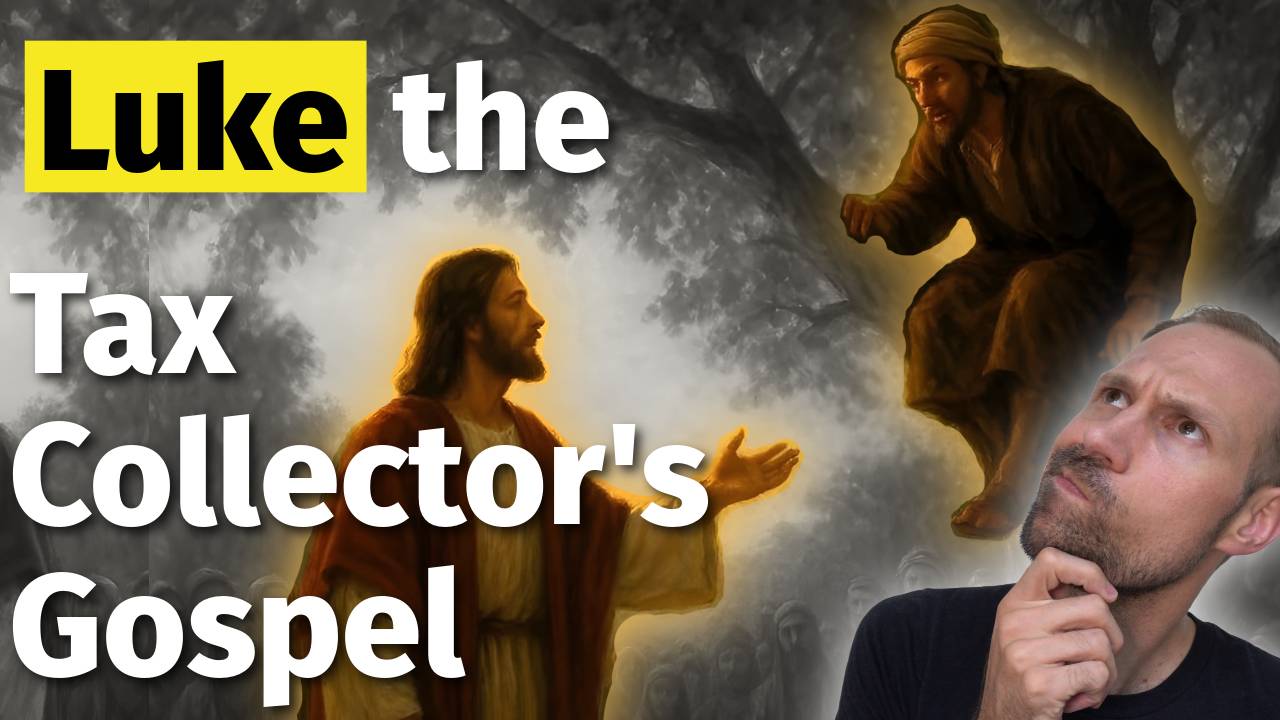
Why Is the Tax Collector in the Tree? Unlocking the Hidden Thesis of Luke's Gospel
Have you ever noticed how some of the most compelling, heartwarming, and even challenging stories in the Gospels only appear in one place? Think of the notorious tax collector perched in a sycamore tree, the despised Samaritan stooping to help an injured man, or the tattered Prodigal Son dragging his feet home. What do these powerful narratives have in common? They are all exclusively found in the Gospel of Luke, a book singularly focused on Jesus' profound mission: "the Son of Man came to seek and to save the lost" (Luke 19:10).
This video delves into the heart of Luke's Gospel, revealing how every narrative choice, every character spotlight, and every parable points back to this foundational truth.
🌟 Luke's Unique Focus: Elevating the Marginalized
From its opening chapters, Luke signals his unique emphasis. Unlike Matthew, which focuses on Joseph's perspective, Luke's birth narratives (Luke 1-2) highlight Mary, her journey to Elizabeth (Luke 1:39), and her song of praise, the Magnificat (Luke 1:46). Luke consistently elevates the status of women, a theme often overlooked in that culture, featuring figures like Anna (Luke 2:36), the Widow of Nain (Luke 7:12), and Mary and Martha (Luke 10:38)—many of these accounts exclusive to his Gospel. Furthermore, while Matthew records wise men visiting the infant Jesus, Luke deliberately shows humble shepherds, the poorest of laborers, receiving the angelic "good news of great joy that will be for all the people" (Luke 2:10).
As Jesus' ministry unfolds, Luke continues to underscore this theme of seeking the lost. In Jesus' baptism account (Luke 3), Luke notably omits the Pharisees, instead featuring repentant tax collectors (Luke 3:12), highlighting Jesus' unique appeal to "lost sinners." This focus on tax collectors reappears throughout Luke's Gospel, more frequently than in any other, solidifying his reputation as a "friend of tax collectors and sinners" (Luke 7:34). Even Jesus' genealogy in Luke (Luke 4:38) traces back to Adam, emphasizing that this "good news" is for all humanity, not just Israel.
🗺️ The Mission Agenda: Good News to the Poor
Luke strategically places Jesus' sermon in Nazareth (Luke 4:18-29) at the very beginning of His Galilean ministry, even though it occurred later chronologically. This choice is programmatic; Jesus declares His mission "to proclaim good news to the poor," setting the agenda for His radical outreach.
He demonstrates this mission by reaching out to and healing those who were considered unclean or outsiders:
- The leper (Luke 5:12)
- The demonically possessed (Luke 4:33)
- The ritually unclean bleeding woman (Luke 8:43)
- The Centurion's Gentile servant (Luke 7:2)
He calls fishermen and even Levi the tax collector (Luke 5:27) to be His disciples, welcoming those who recognize their sinfulness, as Peter did, exclaiming, "Depart from me, for I am a sinful man!" (Luke 5:8).
🧭 Parables of the Lost and Found
The extended travel narrative in Luke (chapters 9-19) is a significant feature, allowing Jesus to continually confront the religious elite's contempt for sinners and their self-righteousness. Parables exclusive to Luke, such as the Pharisee and the Tax Collector (Luke 18:9-14), powerfully illustrate the mercy God extends to the humble sinner, contrasting sharply with the self-justifying. Similarly, the Parable of the Good Samaritan (Luke 10:25-37) teaches religious leaders to care for the marginalized, mirroring the message of the Lost Sheep and the Lost Coin:
- The Good Shepherd will "go after the one [sinner] that is lost" (Luke 15:3).
- There is immense "joy before the angels of God over one sinner who repents" (Luke 15:10).
- The elder brother's refusal to celebrate the Prodigal Son's return (Luke 15:32) serves as a poignant warning to those who fail to rejoice over the found.
✝️ Final Grace: Forgiveness to All Nations
Even in His final hours during Passion Week (Luke 19-24), Jesus' mission remains clear. On the cross, His prayers for forgiveness for His Roman executioners (Luke 23:34) and His promise to the repentant thief (Luke 23:43) are recorded only by Luke, underscoring His boundless grace. And true to form, it is women, not men of status, who are the first witnesses to the empty tomb (Luke 23:55). Ultimately, Jesus summarizes His entire purpose: "that repentance and forgiveness of sins should be proclaimed in his name to all nations" (Luke 24:47).
To help you trace these profound themes and Luke's unique contributions throughout the Gospel, a detailed 8-page chart was developed. This resource will guide you through the text, highlighting categories of "lostness" and identifying narratives exclusive to Luke, enriching your personal study or teaching preparation.
The Gospel of Luke reminds us that Jesus' heart beats for the marginalized, the overlooked, and the lost. It's a powerful call for us to embody the same radical welcome, seeking out those on the fringes and proclaiming the good news of salvation to everyone, just as He did. What does Jesus' focus on the lost mean for your faith journey today?
