
Paul’s Hidden Years After Damascus (Galatians 1–2 Explained)
Feb 06, 2026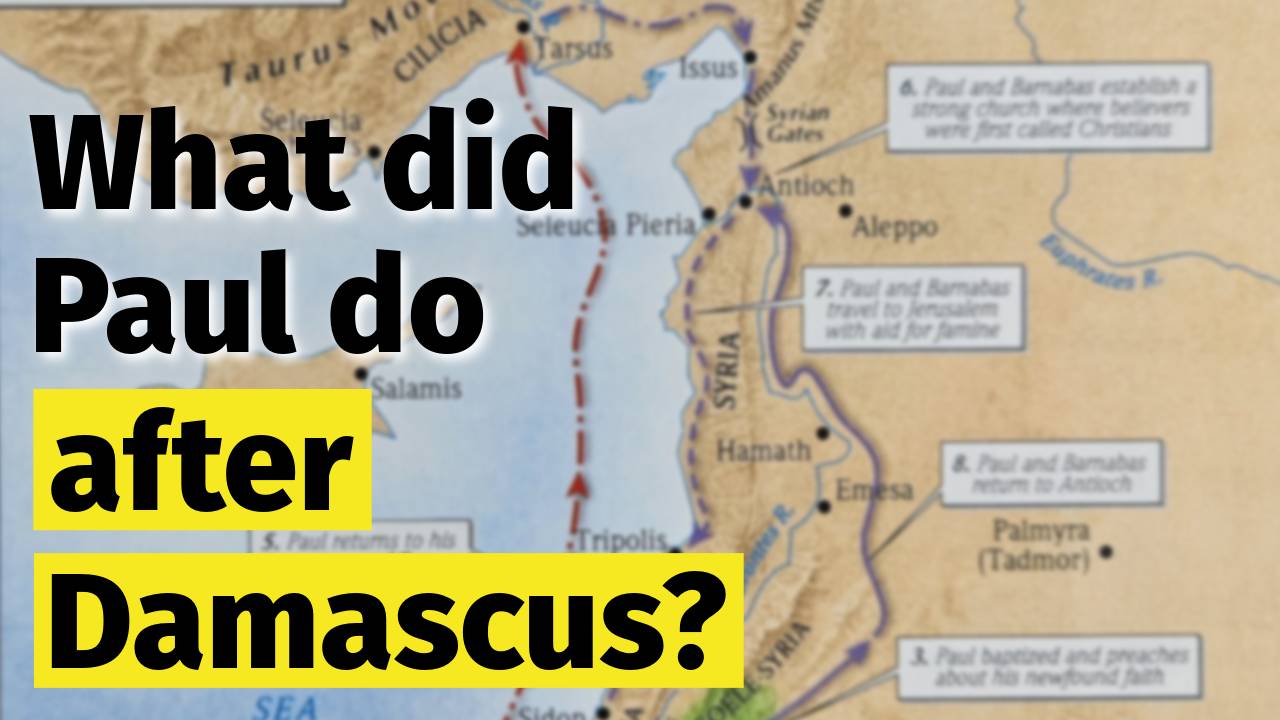
Most Christians can retell the story of Paul’s conversion on the road to Damascus. It’s dramatic, sudden, and unmistakably divine. But far fewer could answer the question that immediately follows it: What happened next?
If we only read the book of Acts, it can feel as though Paul moves straight from conversion into public ministry. Yet in Galatians 1–2, Paul fills in crucial details—details that reshape how we understand his apostleship, his gospel, and the authority with which he speaks.
What Happened After Damascus?
In Galatians 1:15–17, Paul explains that after his conversion, he did not go up to Jerusalem to consult the apostles. Instead, he “went away into Arabia” and remained there for three years. This period—almost entirely absent from Acts—marks a decisive moment in Paul’s formation.
Why does this matter? Because Paul’s opponents in Galatia claimed that his gospel was secondhand, learned from Jerusalem leaders and therefore incomplete. Paul counters by grounding his message not in human transmission, but in divine revelation (Gal 1:11–12).
Geography as Theology
Paul’s movements become part of his argument. Rather than appealing to institutional authority, Paul traces a timeline designed to show that his gospel remained independent, consistent, and unchanged:
- Arabia (Gal 1:17): Three years of withdrawal following his conversion, receiving and clarifying the gospel revealed by Christ.
- Jerusalem (Gal 1:18–19): A brief fifteen-day visit, during which Paul meets only Peter and James.
- Syria and Cilicia (Gal 1:21–23): Many years of ministry, during which Paul remains largely unknown to the churches of Judea.
- Jerusalem again (Gal 2:1–10): Fourteen years after his conversion, Paul presents his gospel to the apostles, who add nothing to it.
This long period—roughly fourteen years from conversion to the events of Galatians 2—demonstrates that Paul’s gospel remained untampered. Even Titus, a Gentile companion, is not compelled to be circumcised (Gal 2:3).
Law, Gospel, and the Crisis in Galatia
The reason Paul recounts this history is the rise of the Judaizers—teachers insisting that Gentiles must keep the Mosaic law to be saved. This controversy culminates in Acts 15 and lies behind Paul’s sharp language in Galatians, where justification by faith is defended against “a different gospel” (Gal 1:6–9).
Paul’s thesis reaches its clearest expression in Galatians 2:16: justification comes not by works of the law, but through faith in Jesus Christ.
Visualizing the Journey
Because Paul’s argument depends so heavily on time and place, a visual timeline can be helpful. The chart associated with this video traces Paul’s post-conversion movements—Arabia, Jerusalem, Tarsus, Antioch—and shows how geography reinforces theology.
📜 Access the Map of Paul’s Early Travels
Why This Still Matters
Paul is not giving us a travel diary. He is defending the gospel itself. His history shows that salvation by grace alone is not a late development or apostolic compromise—it is the message Christ revealed from the beginning.
For readers today, Galatians calls us to guard the gospel carefully, resist subtle distortions, and live in the freedom secured by Christ—not by law, but by faith.
