
Uncovering the Hidden King: Messianic Prophecy in the Book of Esther
Feb 13, 2026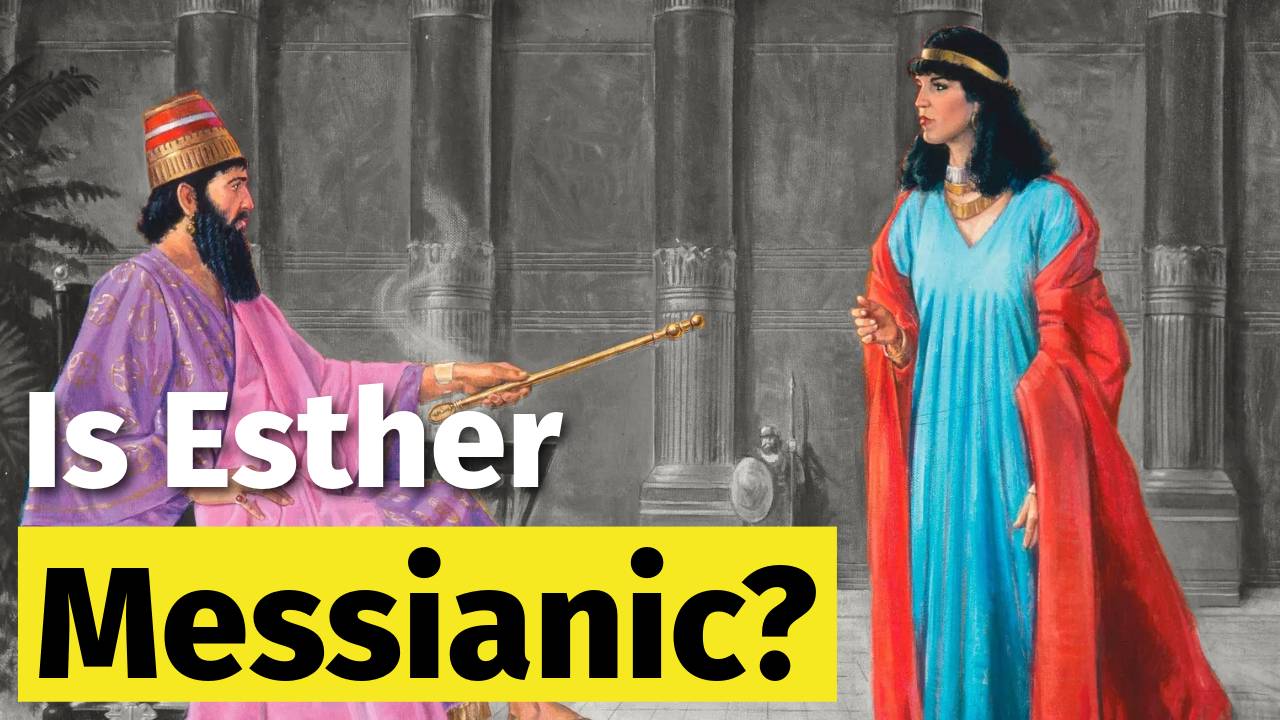
Have you ever read the Book of Esther and wondered where God is? Unlike almost every other book in the Hebrew Bible, God’s name is conspicuously absent, there are no prophets, and no overt divine interventions. It seems like a simple historical account of survival in exile, yet the ancient Israelites who first received this book were asking profound questions about God’s promises and the hope of a coming king. What if Esther is far more than meets the eye—a divinely orchestrated masterpiece brimming with hidden prophecy and Messianic typology?
🎥 Watch the full deep dive video here
The Book of Esther, often overlooked in its profound theological depth, is a carefully constructed narrative designed to silently insist that the hope of a coming king is still vibrantly alive. This isn't achieved through direct predictions, but through a breathtaking series of ancient patterns made new, forming subtle hyperlinks across the biblical narrative.
To understand the architecture of this story, we must look at how the author uses historical context and literary structure to reveal God's hand:
- Historical Displacement: Esther was an exile born 41 years after Daniel and 90 years after Ezekiel. In a world where 80–95% of Jews remained in Persia rather than returning to Judah, the book addresses a people who felt spiritually "displaced."
- The Power of Providence: While the word Yahweh occurs 400 times in Exodus and zero times here, God’s hand is visible through "coincidence." From Esther winning the beauty contest to the King’s timely insomnia (Esther 6:1), the text proves that God's name is absent so His providence can be more obviously present.
- A Masterful Chiasm: The entire book is structured as a giant literary "X" (a chiasm), centering on the pivotal moment where Haman is humiliated and Mordecai is exalted.
The true brilliance of the book, however, lies in the Saul and Agag hyperlink. By tracking the specific character labels, we see a replay of an ancient conflict:
- The Son of Kish: Mordecai is identified as a son of Kish from the tribe of Benjamin (Esther 2:5), the exact lineage of King Saul (1 Samuel 9:1-2).
- The Agagite Enemy: Haman is labeled an Agagite (Esther 3:1), identifying him as a descendant of Agag, the Amalekite king whom Saul was commanded to destroy but ultimately spared in 1 Samuel 15.
- Succeeding Where Saul Failed: While Saul succumbed to the temptation of plunder, the text emphasizes three times that the Jews in Esther "laid no hands on the plunder" (Esther 9:10, 15, 16). Mordecai finally finishes the war Saul started.
- Restoring the Kingdom (Malakote): Just as the kingdom was torn from Saul and given to a "better neighbor" (David), the Malakote is taken from Vashti and given to Esther, and Haman's rank is given to Mordecai.
This narrative points directly to Mordecai as a Messianic model. When Haman’s wife mentions Mordecai’s "seed" (זרע - zerah), she unknowingly triggers hyperlinks to Genesis 3:15 and the scepter of Judah in Genesis 49:10. Furthermore, Mordecai’s final act of "speaking peace to all his people" (Esther 10:3) mirrors the prophecy of the humble king in Zechariah 9:9-10 who speaks peace to the nations.
To fully grasp these intricate connections and visualize the biblical hyperlinks, a comprehensive chart was developed during the video. It serves as an invaluable aid to tracing the Messianic prophecy woven through the narrative.
📜 Download the Messianic Prophecy Chart
The Book of Esther, therefore, is not merely a tale from the past; it's a testament to God's unwavering faithfulness. It assures us that even in silence, His kingdom is moving, and His King—the ultimate "better neighbor"—is coming to speak peace to the nations.
