
From Prison to Resurrection: The Hope That Carried Paul Home
Nov 01, 2025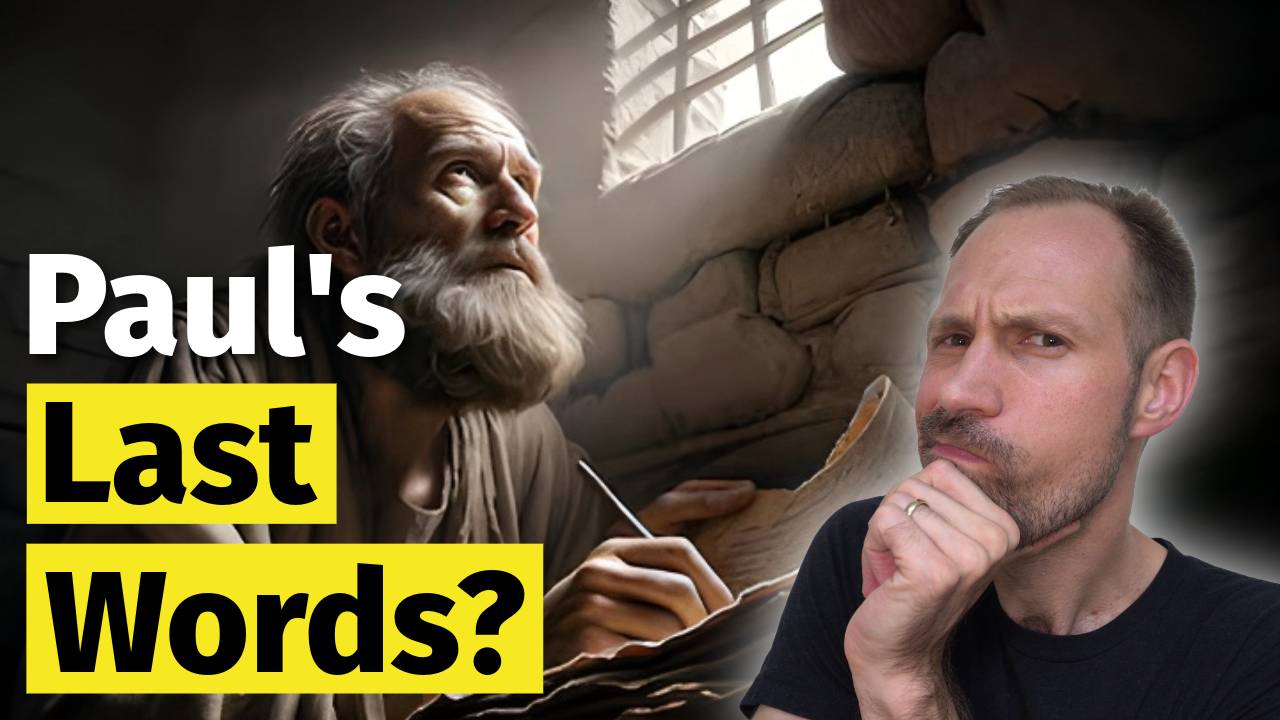
The book of 2 Timothy records Paul’s final words before his death—and it’s far more than a farewell letter. Many read it as Paul “passing the torch” to Timothy, but beneath that, it’s something deeper: Paul’s theology lived out in his final days. What he once taught about the life of Christ, he now clings to on the edge of death.
When you trace the words that keep resurfacing throughout 2 Timothy, a pattern begins to emerge. Certain themes—suffering, endurance, the gospel, resurrection, and the promise of life—appear again and again, revealing what Paul was meditating on as he awaited execution.
Paul writes from a cold Roman prison cell, aware that “the time of [his] departure has come” (4:6). Having already survived one trial (“At my first defense, no one came to stand by me... but the Lord stood by me”), Paul senses that this time, he will not escape. His letter to Timothy carries an unmistakable urgency: “Do your best to come to me soon... come before winter.”
This plea—“Come to me”—is the first and primary purpose of the letter. But Paul also writes to charge Timothy with two more tasks:
- Share in suffering for the gospel.
“I suffer, but I am not ashamed... so you also, Timothy, do not be ashamed but share in suffering for the gospel.” (1:12) - Confront false teachers in Ephesus.
Paul contrasts “dishonorable vessels” (false teachers) with the “honorable vessels” of faithful ministry, urging Timothy to “continue in what you have learned” and “preach the word... in season and out of season.”
Yet beneath all this instruction lies a single heartbeat: the hope of resurrection.

Besides 1 Corinthians 15, no other letter of Paul speaks so often of life beyond death. He opens the book itself with the phrase: “Paul, an apostle of Christ Jesus by the will of God, according to the promise of life that is in Christ Jesus.” (1:1)
The gospel, as Paul now sees it from death’s doorstep, is this:
“Christ Jesus... abolished death and brought life and immortality to light through the gospel.” (1:10)
This is not abstract theology—it’s personal hope. The resurrection isn’t just something Paul preached; it’s what sustained him. As Randy Alcorn once wrote, “If we are Christians, we get two opportunities to live on earth. The first is a dot. The second—a line that extends forever.” Paul’s final letter is a plea to live for that line.
These are Paul’s last recorded words. From a Roman cell, he writes not with fear, but with hope—the same hope that carries every believer through suffering: that Christ has abolished death and brought life and immortality to light through the gospel.
